Thursday, December 11, 2025

It's more than rocket science...

 A few times each week, I get cool notices from Open Education Resource networks in Academia that someone very far away, from a completely different culture, has read a small piece of my social science labor...and has hopefully found it useful. As a scientist long interested in how teams can live and work together in extreme environments (like space) to do really complicated cooperative things (like rocket science or medicine), I take great joy in adding to academia. Not the ivory tower or professorial status of it that you're likely imagining since I said the word "academia" though. 

Instead, my joy is the "academia" the dictionaries define as "the environment or community concerned with the pursuit of research, education, and scholarship." The harder-than-rocket-science-or-even-neurosurgery heroics of cooperatively building a community in pursuit of information about things that are difficult to learn (let alone humanly know).

There is no money in it. Rarely any fame. And contrary to what social media might tell you, there is no status in the academic ivory tower either. In reality, there is often ill-status even. Friends and family (and sometimes political parties too) dub me or my efforts by derogatory terms: egghead, boffin, out of touch, armchair expert, head in the clouds, ivory tower buffoon, sheltered, high-brow etc. Some terms are better descriptors than others. Yes, my head is often in the clouds, in space sweating with international teams of astronauts figuring out how to survive critical challenges in the harshest conditions known to humankind in fact. Yet, I'm never in that Ivory Tower. What I learn academically goes into immediate real word application, supporting the day-to-day work of teams of healthcare providers trying to save babies and in the team I was born into too, my family. 

Why has academia become a bad word? Why is cooperating to build an applicable community of knowledge a bad thing to so many people now? Why is it made over to be a cold, detached devil in several cultures today?

I don't have answers to these questions, but I do know that I still derive great joy from knowing that others somewhere on this great spaceship we call Earth (that contains all of us) are using what I've learned to help us learn even more yet. Sure, rocket science is great. Awesome even. It's more than rocket science though...it's the even more difficult and beautiful cooperative seeking of understanding and building of knowledge. When the rockets are ancient history and no longer great technological marvels, the mass coordinated act of academia will still be a miracle.

https://www.cambridge.org/core/journals/industrial-and-organizational-psychology/article/abs/rocket-science-of-teams/CA3BDC207BEF40256ED07DA50D532D21
Keeton, K. E., Schmidt, L. L., Slack, K. J., & Malka, A. A. (2012). The rocket science of teams. Industrial and Organizational Psychology5(1), 32-35.


Wednesday, February 8, 2023

My ADHD and how I discovered I my Superpowers

 I was diagnosed in college, almost by accident, because I volunteered to be a test patient for graduate students in clinical psychology who were trying to learn to give intelligence tests well. One of these noticed that despite testing well (and being a 4.0 student) I hummed, fidgeted, zoned out, and missed easy details on various parts of the test. He recommended I go to a practicing clinician who specialized in ADHD and get assessed. I laughed. At the time, only young boys who were troubled in school were typically diagnosed with ADHD. I was 20 years old, graduated high school summa cum laude, had kept an academic scholarship for two years already, and sat (relatively still) through 3-hour college classes. I wasn't disorganized (my less-than-organized roomies all relied on me to clean and put all of our things away). So what if I hummed, fidgeted, relied on speed reading, and got incredibly bored by doing the same thing twice? 

But two months after that kind recommendation to get assessed, I got an antibiotic-resistant upper respiratory infection and my physician asked me how much I was sleeping on average. Five hours on a good night, three hours on a standard night. At first, my physician assumed this shortened sleep period was the tipping point for my infection, but then he caught himself and asked if that was just lately or always. Always. I read books in bed in elementary school so I could stay in bed while the rest of my family slept without getting in trouble. I couldn't usually sleep more than five hours even if I was tired and stayed in bed for 12 hours (unless of course, I stayed up for 3 days, then I could sleep 12 hours). Kudos to my physician for not just prescribing me anxiety or sleep medication as so many do. Instead, he told me to go see a clinical psychologist to see if it was insomnia produced by anxiety or something else entirely that he as a family physician was not trained to assess.

Again, I got lucky that the clinical psychologist I made an appointment with took the time to really ask why I was there--so that I confided both the graduate student's and my physician's rationale for recommending assessment. So many healthcare professionals are too pressed for time to do such a good initial patient exam, let alone build a holistic understanding of the problem from those details. There were many things to parse out, after all, I was 20 years old and who has their life together at that age? But one of the key things that I learned is that I did exhibit many of the symptoms of both hyperactivity and inattention (or difficulty focusing) (aka ADHD). I just didn't exhibit them in the ways that most people talk about (even today). My psychologist posited that this was because I was also "Gifted and Talented" (which at the time just meant an IQ over 120) and used those gifts to compensate for my symptoms - which messed with their appearance. I didn't get out of my seat in the classroom, instead, I doodled non-stop and bounced my leg up and down like a piston about to blow. I made a ton of mistakes filling out forms, writing papers, etc. because of my inability to pay attention to details, but I got things done early and recruited editors to help me fix them before I turned them in (the only C I ever made was in spelling because no editors were allowed!). I lost things for necessary tasks all the time, so I compensated by making task stations where the tools to do something were in visible piles and I didn't have to remember where I left them. I had difficulty waiting my turn, so I avoided situations where I had to wait or went earlier or later than the crowd. But...

There were things I couldn't think my way around or compensate for on my own without knowing more about ADHD, like sleeping enough or noticing that I was taking over someone else's tasks or interrupting them in my enthusiasm or realizing how emotionally labile I could be in relationships. I was horrified. ADHD was considered a "mental illness." This something would always be "wrong" with me. No wonder I felt abnormal all the time. But my young, idealistic, psychologist challenged me to also think about how ADHD could make my life even better. How could knowing I had these symptoms and why be used to help engineer my life to fit me better? What boundaries were now obvious? What limits could I stop wasting time fighting, accept and just forget now? What was different about someone with ADHD that I could use to my advantage, knowing someone else without it wouldn't think of that thing that way? In other words, what superpowers did ADHD grant me?

This was decades before the concept of Neurodiversity made it into Youtube Vlogs. Decades before studies on entrepreneurs like Steve Jobs, Charles Schwab, Sir Richard Branton, etc. chronicled how their ADHD enabled them. Decades before research validated that other symptoms of ADHD also often included exceptional creativity, multi-tasking, risk-taking, high energy, chaos tolerance, and resilience. In many ways, I was lucky that someone who cared about me was smart enough to ask those questions about how my neurodiversity could be both a beneficial limiter and a unique levererager in my life. I know many people are not near so lucky, and that is why I am writing this. I don't normally tell people this story, but I realize there is great power in being vulnerable and authentic about my experience. Maybe just sharing it can help others ask these questions. You don't necessarily need a psychologist, or a parent, or a friend to be kind enough to ask them. I can (and do still) ask them of myself. It's hard work, and uncomfortable, and sure it's better with a friend...but it still pays loads of return in my health, happiness, relationships, and performance.

I often make bullet lists. 

  • ADHD Limiter: I hate watching TV (too slow, not active) - who needs it, I can just accept that I like books better instead because I can imagine everything myself at what speed I like. 
  • ADHD Leverager: I have a great imagination. 99% of the population probably isn't imagining it that way, even screenwriters, and my family will probably find that is a really interesting conversation starter at dinner tonight.
Usually, this also helps me to think about new ways of compensating or working around a limiter when I want to. For example, my wife likes to watch TV with me, but I hate TV. She is okay if I draw while we watch TV together. I can stop drawing to watch the interesting parts or to talk with her about them, without losing my place.

Do you have an anomaly in mental functioning too? How does knowing this and its limits help you engineer your life to fit you better? And even more important, what superpowers does it give you? I'm asking for so many friends, myself included.

Our complexity, and ability to appreciate complexities (like the complex eye), make us beautiful.
Our complexities, and ability to appreciate complexities (like the complex eye), make us beautiful.


Wednesday, January 25, 2023

Sublimation Bloodbath: A Poetic Treatise on the Faith of Living

It’s a sublimation bloodbath out here,

And the only one I’ve murdered is me;

But I’ve heard you gotta give to be free.

Or in technical computer science terms…

              What do ALL the Good Books say?

The whole universe is a slave hard drive,

A host of confusion about primary and secondary

Greater memory of meaning, master communication,

Ghosted onto galaxies in stars.

              Psychologically speaking, a continuum, of

Binary signals clustered into complicated plots

Beyond human comprehensions, allowing projections,

So I can attribute to everything, what is on my mind.

              So ALL the Good Books say, sacrifice

And sublimation, is an essential task in life.

There is no authoritative right in sight

And I’ve got to cut out certainty’s heart,

Dismantle the very bones of clarity.

Offer the choicest morsels of my Ego

And my Id…

To the GREAT MAW of the UNKNOWN,

To the infrared spectrum of invisible truth,

So the light may devour my vagrancies.

              I must slaughter the fatted lamb of knowing,

To dwell in the home the Heavens sent

Between nothing and everything to repent.

It’s a sublimation bloodbath.

              The old kidnapper’s demand,

I've got to cut certainty and just pay the ransom,

If I ever want to be free,

If I ever want to see the rest,

of me, alive again.


Monday, April 11, 2022

Callings

When I was young, I thought I had one Calling, one enduring vocation or purpose in life. Lately, I've come to realize that it might be more of a hierarchy of Callings, and that like everything else in the universe, these Callings and their relationships are dynamic. As Mrs. Judy Berry told us repeatedly in Chemistry class, the only constant is change. Certainly, the way I have learned to listen to God/ the Universe's callings has changed. The tools I have acquired to serve these Callings have also definitely changed as a result of my education and experience. 

In fact, I have reached a pain point. I hear Conflicting Callings. Sometimes even contrasting Callings, like Art and Science. And so many Callings that I cannot serve them all, or even a few, well at once. How do you decide what calling to serve when all are noble and necessary? When all help you remember the joys and miracle of all creation? When all are open to you and require roughly the same amount of work and resources to pursue (i.e. there is no one obviously expeditious pick)?

In high school, I knew I wanted to help. "Helping" was my calling. Specifically, I wanted to help people process their emotions and find meaning in their lives. Mainly I considered two possible careers, one as a writer, or one in psychology. Eventually, I decided that I could be a writer with any education, but I could not be a psychologist without degrees in psychology.  I also thought it likely that learning psychology would make me a better writer (with a better understanding of characters' motivations). This realization solved the painful need to make decisions about what to do after graduation. Granted I still had to make many decisions along the way...like would I be of best helps to others in finding meaning in life as a Clinical, Counseling, or Industrial-Organizational Psychologist? Could I serve well enough with a master's or did I need a doctorate? And the questions have never really ended. Should I work as a research scientist or as an applied scientist-practitioner? As an internal or external consultant? For a non-profit providing a critical service or for a private corporation employing hundreds of thousands providing infrastructure? What about teaching too, just adults on the job or higher education as well? Where is the sweet spot of greatest need fitted to my particular greatest strengths?

I was always looking for that one, sweet spot. The Calling...and maybe that is the problem. Maybe there is one big Calling factor with dimensions and sub-factors, just like we have a personality with 5 dimensions (OCEAN) that can be interpreted into 16+ further sub-factors (https://en.wikipedia.org/wiki/Personality)? Maybe my main Calling is simply, "to help others find meaning in life" and there are dimensions I must shift my attention to over the course of my life like writing, psychology, art, love, caretaking, etc. And even among those dimensions, there are sub-factors, like poetry, fiction, research articles, and textbooks under the dimension for writing. I couldn't stop myself from writing poetry in my first 30 years of life, but after that, I longed to write books. Every dimension has competing sub-factors like that for me. When asked what I want the next five or ten years of my life to look like now (compared to being asked this question a decade ago)...I have a very difficult time answering. Now I want my life in ten years to look like everything. I want to be the old lady in argyle socks with a chicken and two cats in the front basket of her bicycle peddling to the farmer's market to sell paintings on Saturday who does yoga and a cooking class with kids on Sunday, who coaches the executive board of the SPCA on Monday, runs a teamwork simulation for firefighters on Tuesday, writes a romance the rest of the week, and then leaves to present Grand Rounds at a hospital in Auckland and hike in New Zealand on Friday. It's impossible.

Or is it? It's certainly impossible to achieve so many outcomes. But what if I let go of the outcomes? What if I let go of the timetable? What if I just think about the doing, the dimensions themselves, instead of what doing them looks like or achieves? What if I just make sure I am doing something in every dimension of my Calling? I can do art, do writing, do psychology, do love, etc. That is possible. Maybe I won't "achieve" much in any one dimension, but is that really the point? What if the point is simply that I help myself find joy and meaning in life? What if that helps others do so too? Just that. 

Lately, I think the Calling, sounds like it is telling me to serve as a polymath. A polymath is traditionally thought to mean a "renaissance man," who has mastered many talents, and we picture someone like Leonardo DaVinci. I'm no Leo. But the dictionary definition of a polymath isn't about talents or outcomes. The dictionary definition of a polymath is "a person of wide-ranging learning." When I am widely active, open to and learning everything, I am happiest. I find life has great meaning for me the more widely I learn. I gain a wealth of experiences...even when I accomplish very little. In turn, that wealth of experience makes it easier for me to listen to and understand what others are sharing more fully. I become someone who understands others well, I become more equipped to help others...and maybe that is the biggest, most helpful calling I could possibly serve anyway? Is there anything more needed than someone who helps others feel heard and understood? That sounds like a grand Calling to me.

Maybe the sweet spot isn't where my interests in writing, psychology, art, love, etc. all coalesce to serve in the greatest possible way to help people. The sweet spot could be doing all of these things in ways that bring me a great balance of joy and learning. If I enjoy the learning, I will learn more. If I learn such a wide variety of things, I can understand and share in more ways all the things that bring others more meaningful lives. I have no doubt that a deep connection to purpose is important, but I think I  hyper-focused on depth for a while. 

The universe is deep and broad, and to paraphrase many religions, "I am nothing. I am everything. I am the universe." We are all made of the same stuff. The signal I hear now says be broad and deep.

I am writing, consulting, teaching, and braving another dimension now too: creating art. I've always doodled, and I've been into photography since 1992...these arts were a way for me to notice and honor the existing beauty in the world. A hobby. I started sharing #RandomEverydayBeauty photos on Facebook in 2005...I felt a calling to share the glimpses of beauty I noticed in case others needed them too. In 2018 I felt a tug to try drawing for Inktober: a commitment to doodle one thing a day in ink for 31 days. The act of drawing centered me. For a few minutes each day, I didn't think about anything except observing and creating. I've done Inktober every year since then, but in 2021 something special happened. Another polymath professor asked me to join a faculty, staff, and student art club online so we could share Inktober efforts and inspirations. The sharing went so well, we made it go on beyond October. I started drawing something every week, even after October. I asked friends if they wanted a painting or drawing of anything just so I could stretch my skills on new subjects. Friends offered birds, pets, landscapes, loved ones, random ideas (...I'm looking at you fellow author who asked for a chicken smoking a cigarette) for me to paint. 

I decided to sell a few of these efforts on RedBubble.com so I could pay for more art supplies, so I could paint more, so I could learn more. More artists started sharing their art with me, inspiring new ideas, and helping me understand their motivations better. I became even wealthier in friends. And one gift I did not expect...I've found such joy in painting portraits of family, babies, and pets in ways that are meaningful for others. I just did it to practice at first, but lately, everyone I've done one for has mentioned something about how the painting allows them to represent their memories and the spirit of the subject better than their photos (that have stuff they don't want in the backgrounds or don't have all of the people they want in it together, etc.). I am answering a call to help that I didn't hear before today. I'm open to these calls now too. Van Gogh lost an ear, lived in an asylum broke and unknown, but loved art enough to just do lots of it every day anyway... it could be that he knew learning in this dimension was worth everything for him at that moment? Van Gogh only sold one painting while he was alive, for 400 francs (roughly worth $4,000 today), seven months before his death. He never knew any of the outcomes like how many millions of people would study and love his art because it helped them see the world's beauty. I take it as a lesson...I may not know how I'm helping, but I can't help at all if I don't answer the Callings, listen to their dimensions and reply to whatever sub-factors come up.

https://laceysarts.com/
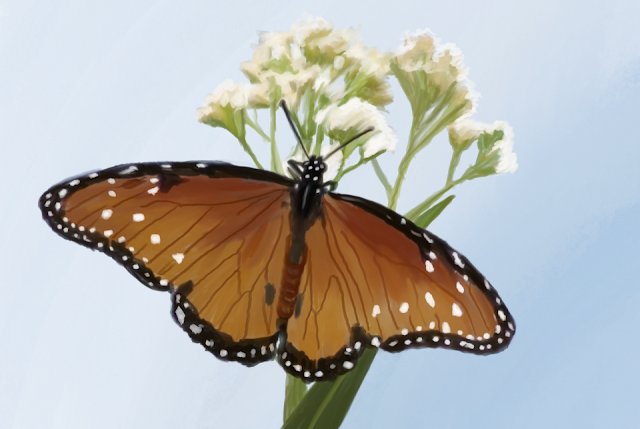
This is my painting of a Queen Butterfly serving its "Calling" as a pollinator.


Tuesday, April 5, 2022

The 7 C's of Psychologically Sexy

Helen E. Fisher, Ph.D. (a biological anthropologist) describes 3 brain systems for love: lust, attraction, and attachment (http://helenfisher.com/downloads/articles/15npolve.pdf). Our neurology, biology, and the environments (both social and physical) that we live in have conspired (through evolution) to create these 3 brain systems. In one way or another, all 3 systems are interested in helping us perpetuate life (our own, new/ next generational, social communities, etc.). The Lust Brain drives us to seek sexual gratification (inspiring us to expend precious energy to procreate, i.e. create lives). The Attraction Brain inspires us to focus on winning and guarding the beneficial relationships that make us most interested in living. The Attachment Brain influences us to cooperate and build the communal and compassionate relationships that sustain lives. Obviously, being physically sexy helps you engage someone's lust brain...but in humans, something curious happens pretty quickly...we start looking at the deep-level characteristics in others (e.g. personality, values, principles, faith, etc.) as we interact with them in groups (https://journals.aom.org/doi/abs/10.5465/256901). Maybe even more shocking, we can find ourselves eventually lusting after someone we've become attached to, who didn't physically trigger our lust...attraction can sneak in after the fact! (https://psycnet.apa.org/record/1971-08141-001) We can even come to think of an objectively attractive person as downright homely or ugly if they are (or become) psychologically ugly (e.g. aggressive, cynical, abusive). It turns out that being psychologically sexy is where it's at!

So regardless of gender, sexual orientation, age, race, culture, and dozens of other specifiers...what generally makes one person psychologically sexy to another? The answer from psychological research so far seems to be easiest to summarize using these seven C's: (Note: Famed teams researcher, Eduardo Salas, Ph.D., has the seven c's of effective teamwork; so I owe the conceptual model to him.)

  1. Consenting: People who first consent or agree that we are interesting, earn our interest in return. Furthermore, people who ask for our consent before taking action that impacts us earn our trust. For example, most of us think it's pretty nice when someone tells us they find us attractive and ask if they can kiss or hug us. Even in long-term relationships, we rate our spouses as more attractive when they habitually tell us they would like to surprise us and ask if a specific time to do so would work for us before committing to expensive trips or dinners, etc.
  2. Competent: We find it sexy when a person has the necessary knowledge, ability, or skill to do something difficult that we value. This is part of what makes certain professions so attractive and why romantic heroes/ heroines frequently have jobs that obviously involve some calling (rather than just an occupation) - such as civil rights lawyer or ER doctor. It goes further than that though (after all we're still attracted to unemployed folks who answer callings in other ways)...because our brains associate competence with integrity and this triggers our trust that they will devote the time necessary to learn and care for our relationship too.
  3. Caring: We like people who perform acts of kindness, and we love people who perform acts of kindness to us. Why? Because acts of kindness maximize our social benefits and minimize our social costs. We feel a sense of obligation toward those who do good things for us. When the caring/ good acts pile up enough we feel loved. Please note though, that to be considered a good thing, a caring act must be competently provided by someone in a consenting fashion (see the first two C's).
  4. Compassionate: I know, you want to know how compassion is different than caring, so allow me to describe it a little first. Caring is an act. Compassion is a feeling. Specifically, the feeling of empathy or sympathy for the suffering or misfortune of another. Suffering cannot always be avoided or alleviated, and in these cases, we love folks who help us validate our feelings--it's all the emotional satisfaction we can obtain in some cases. We also love folks who try to understand us, it is part of expressing their interest in us even when they cannot provide caring.
  5. Confident: There are two important meanings to this C. The first is we love those we can confide in. Those who make us feel like it is safe to be vulnerable, to be our full awkward selves. They won't hold our ugly moments against us in the long run. The second meaning is that they are confident/ self-assured enough in their own worth to accept our apologies when we do admit mistakes, and even, more importantly, to accept our acts of caring and compassion for them as the truth when it is. As anyone who has ever been in love with someone battling depression or drug- abuse can tell you, it is very difficult and demoralizing to offer caring and compassion to someone who cannot or will not accept it because their struggles have ruined too much of their confidence or self-worth. While we appreciate humility, most of us also find it unattractive when someone declines a deserved compliment. We're attracted to folks confident enough to accept a compliment (caring) when they deserve it. (Note that different cultures do define what deserving is very different though.)
  6. Cooperative: We are more likely to be attracted to someone when we share a common goal, and we are attached to those who labor mutually toward that goal with us. Folks are psychologically sexy when they agree to cooperate to achieve something we both love or value (e.g. raising a child, building a home, saving enough money to retire, etc.). Families grow together faster and stay together longer when they keep agreeing and focusing on common goals that suit their energy realities. We find folks who will build something with us psychologically sexy, whereas folks who refuse to cooperate toward achieving a goal we've agreed on are a big turn-off...and often the seeds of divorce.
  7. Creative: The last C is a tall order. We're attracted to people with original ideas, especially those people who have original ideas about how to embody and exhibit some of those previous C's over the duration of our relationship with them. When someone invents a new way to show us they care, express their empathy, build confidence with us, or cooperate toward an interesting new goal with us, then we love them all the more for it. When we are invited to mutual creativity we feel more alive and satisfied with living together.
Now for sailing the 7 C's...
Here is the good news. You can learn to be psychologically sexier...even if you're already sailing these seven C's you can always continue your mastery studies. As those of us with a growth mindset or a learning orientation already know, everything in the universe is constantly changing so there is always a need to learn how to adapt strength to new variations.
Here is the (maybe) bad news. Since everyone in every relationship you will ever have is growing and changing you can never completely master these seven C's. You will always have something to learn, but this also means you can continuously become more and more psychologically sexy, even as you age and your physical beauty fades.
Beauty is in the perceptions of the beholder, a cognitive process that happens behind the eye, rather than in the eye.
A few additional words for my fellow authors...
When it comes to writing romance, I think it becomes very obvious which authors must know this. The ones who do know are able to create characters that we come to deeply love in the span of a story by showing us how their behavior embodies these 7 C's. Whereas authors who rely on physical descriptions are able to create characters we can imagine lusting after but aren't really all that memorable (we don't really love to love them enough to remember them).

Gertrude Stein wrote, "Rose is a rose is a rose" and Shakespeare wrote, "A rose by any other name would smell as sweet."


Tuesday, March 8, 2022

First-Generation Ph.D.

Very few folks (less than 3% of college graduates) choose to go on to a doctoral program. Most jobs don't require a philosophical doctorate (Ph.D.), but for those who want the jobs that do, the pursuit of that degree may be even more difficult if you are the first generation of your family to try it. When you're "first-gen" anything there are even fewer people you know well who can tell you the practical outs and ins of getting it done. Professors and other mentors are all very helpful, especially in helping you figure out where to apply and how to get in, but they will likely forget to tell you a few practical things about actually going to grad school to earn a Ph.D. I've been there, and while I did make it blindly, I'd like to share a few things I learned so that you can make new and different (and hopefully more exciting) mistakes.
Things I wish I knew when I started my doctorate...

  1. Most Ph.D. programs waive your tuition. You only have to pay for university services and fees (and living and eating). My father earned a DVM, and like a medical student, he had to pay for everything, including tuition, so I assumed I would have to do so too. I turned down some perfectly good programs that accepted me on my first try at a Ph.D. program because I did not know this and thought I'd have to come up with the tuition fees they charged college students. This was an INSANE mistake...the programs that I had applied to had less than a 1% acceptance rate, and it took me three years and three attempts to get into the program at UH (a great program that I knew I could afford). I could have gone to a great school the first time!
  2. Most Ph.D. programs offer you a paying job as a research or teaching assistant. The pay isn't great, but it is typically enough for you to buy basic groceries and live frugally in an apartment with roommates. I worked several part-time jobs and as many full-time summer hours as possible as an undergraduate to save money up, thinking that I would not be able to spare the time to earn any. Admittedly, having savings did allow me to stress less in school about making ends meet (and even buy a new car). However, in retrospect, I wish I'd worked one less part-time job or taken an extra week or two in the summer to hang out with family.
  3. Most universities do offer housing (at good discounts) and/ or help finding roommates, but unlike in college, you have to ask around for it. No one is going to call you or email you and ask you if you would like to know your housing options. No helpful administrator called like they did in college, so I thought there were no housing options for grad students. As a "first-gen" you've likely learned that you have to figure things out for yourself, but you're also more likely to just get things done yourself... it has worked every time so far, right? That mentality is probably part of what got you to grad school, but it will keep you from succeeding in grad school if you don't modify it. There are resources, but they are probably buried in the complexity of bureaucratic departments. You may have to call 16 people and look at 57 web pages four different times to find them, and since you are first-gen, you will need to ask your new classmates...before you get to school (which brings me to #4).
  4. Most Ph.D. programs will help you connect with your classmates before you start school if you offer your own contact information and ask the department to share it with your classmates. You can also ask to talk to several students already in the program, some you may have already talked to about how best to get into the program. Now you need to talk to your future classmates about how to live in the area, commute to class, connect to people quickly, find resources on campus, and what expenses surprised them (e.g. there is a fee to apply for graduation! and you have to rent your robes!). I did all this connecting to classmates after I started, in my first year, and while it worked out great still (your classmates will be the most amazing part of your experience)...it could have been so much better if I'd started sharing two to three months before the first day of class. I would have enjoyed a much stronger social support network from the very start.
  5. You'll be in a hurry to "make good" and "get out" so that you can really make a living. First-gens don't go to grad school to avoid work (although anyone who does so is sadly misinformed about how much torturous work grad school really is). We go to school to hurry up and start using our knowledge to kick ass. I tried to go as slow as I could because I wanted to learn everything. I did take the four internships and earn the two extra certifications, but I had a much harder time than necessary savoring the learning. I didn't take into account how much my earnings would exponentially snowball after graduation because I did those extra things...all I knew is that I wasn't making as much money as my friends who didn't go to grad school and they'd been earning that every year I was stuck in school. I felt like I would never catch up. I did though. A year after graduation I was making double what most of my friends who didn't earn a doctorate made (and I didn't have the debt most MDs, DVMs, and JDs have). Within a decade, those earnings tripled, and now there are 10 job openings for every Ph.D. in my field and lots of jobs that don't require a Ph.D. still prefer candidates who have one. I wish that I had worried less about my degree being practical or fiscally worthwhile. Honestly, even if I'd never caught up with my peers after grad school, the Ph.D. has been worthwhile because it opened doors to amazing working experiences and colleagues that I would never have accessed without it. The degree wasn't sufficient to get everything, but it was a golden ticket to the amusement park of life and as a "first-gen" you can rely on yourself to do what it takes to get in line for all the great rides once you get in. 
  6. Imposter syndrome/ phenomena (i.e. always feeling like you're a fake and everyone else knows what is going on and how to do it) is real. First-gens feel it particularly sharply sometimes. I know I did the first time I got verbally smacked for being "unprofessional" in my presentation of statistical analyses. I know my suits were cheap and my shoes weren't shiny and there were obvious bags under my eyes and doubt in my voice. What I did not know is that everyone feels this. Everyone. Even the professors mentoring you. Even your internship boss. Even the committee evaluating your grant applications. Even you, even after your degree and decades of experience, will likely still feel like you are faking it. I learned to embrace that feeling...I'm faking it every day, so I can go in and learn more and fake it even better tomorrow. I just wish I'd embraced that idea more at the start of my doctoral degree. There is great freedom in embracing the knowledge that failure is required to grow...it takes a great deal of fear and pain out of the process.
You may already know all these things if you're a first-gen going for a Ph.D. I hope you do, but I wanted to spell them out for those that don't because I wish someone had been able to for me. One final note, if you're muscling your way through a Ph.D., good luck, God speed (but not too much speed), and congratulations!
The Fancy Ph.D. Robes!


Friday, February 18, 2022

My Wake Playlist Requests

Waylon, my black kitten
No need to mope!

The first three letters of a funeral are fun. I want to make sure if I have one, you have fun. I know I cannot control what, if any, service happens. I seriously doubt my family can arrange the Sean-Connery-as-King-Arthur style, flaming arrow send-off of my dreams; or even an approximation of one of Terry Pratchett's Nac Mac Feegle wakes. However, it's pretty easy to include a little meaningful music with some whiskey (and if you want to cheers with one of my go-to whiskies, those would be Macallan 12 Scotch, Woodford Reserve Bourbon, or Sagamore Spirit Rye). Without further ado, here are the songs I am requesting and why; and please return the favor in the comments with some songs you'd pick for yours (NOTE, I reserve the right to borrow good ideas and add to this list at any time).

1. Nothing I can do about it now, by Willie Nelson https://youtu.be/PRGpr7VansU 

Why this one? My first live concert was Willie at the Summit Arena. The Summit was bought by a Mega Church and is now lovingly referred to as the "God Bowl"...ironies? It's good to go out to the music you came in on. Also, this song is my sense of humor. I'm a compassionate smart-ass. I try to laugh at myself. Life is absurd. I was nothing in this world without my sense of humor, my key to survival.

2. Sea Image, by the Chieftans https://youtu.be/tUoVIZ4RMPo 

This one is for "Cheers" to the journey! I have an image of an endless sea. The end of this life may be the ultimate journey of exploration and the start of any great journey makes me feel giddy...all those potential possibilities still shining ahead. Please, hoist my memories to the sailing wind and be happy for our time.

3. Brindisi (The Drinking Song, from the opera, La Traviata), by Giacomo Puccini https://youtu.be/UZvgmpiQCcI 
I want to invite anyone listening with me in mind to "Fill the cup, let us drink, that beauty blossoms, let the new day find us in this paradise." I am content that the next adventure opens. Energy cannot be created or destroyed in our universe, only transformed. Let the new day find us.


4. She's My Ride Home, by Blue October https://youtu.be/Vj7dDACpC0w 
Granted it may take a weird sense of humor for folks to understand why I want this one played at the end of my life, but "I am reaching for the stars with you" now as surely as ever and "who cares if no one else believes," because you're my ride home and you're what mattered if you're listening to it. Also, I found myself more at many of Blue October's live performances in Houston before they had a record label, and the song is a great reminder that we, and our art, make each other.

5. Honky Tonk Heroes, by Waylon Jennings https://youtu.be/I94VCjY_E7Y 
Because, "I done did everything that needs done," and "there weren't another way to be." I'm satisfied as long as I "danced holes in my shoes" and hope you are too. Waylon was one of the first 8-track cassettes of my parents that I wore out, and some of the first songs I sang standing in the back of pick-up trucks with the other kids on family farms...just being was enough then and it still is now.


6. Dreams, by The Cranberries https://youtu.be/tYFYoLEO0dM 

This why for this one is literally in the lyrics, "The person falling here is me...you're a dream to me." Thank you for having my heart.

7. Beloved, by Mumford and Sons https://youtu.be/IqFsRt0uYzA 
Because I remember that you were with me, and I hope you remember that I am with you. "As you leave, I won't hold you back," please, "sit and talk the stars down from the sky" and know our conversations are cherished still.

8. Concerto for two trumpets in c major rv 537, by Antonio Vivaldi https://youtu.be/gtvwSwiBIG4
I like the idea of ringing in the next adventure with a triumphant blast. Also, Vivaldi wrote this when no one wrote music for trumpets (they were military communication instruments only at the time, like an early 18th-century satellite phone) ... he turned something used by humans to facilitate war into something beautiful to celebrate life (a pretty great metaphor for a funeral).


9. Close to Me, by The Cure https://youtu.be/FY-zoTZjSVM 
This song played at our wedding, and it should play at my wake too. From wedding to wake, my love made the, "works of my every day/ Not a reproach, but a song," and I never thought it'd be this close to me.


10. The Flower Duet (Aria from the opera, Lakme), by Leo Delibes (As a Houstonian, I'm partial to Rene Flemming singing) https://youtu.be/832M0B3X6Lg 
Life is so beautiful because it is absurdly ephemeral. I take joy and comfort in #RandomEverydayBeauty and hope that others will too. Some horrible things happen for no reason, and that means we do not need a reason for joyful things to happen too...just a will to bring them about. Revel in the beauty of the flowers and remember how rich life is for our love.


11. Amazing Grace, performed by Destiny's Child https://youtu.be/LUGoGHpGndE 
To date, many family members' funerals have included Amazing Grace, so this is a tribute to my ancestors. This version, by Destiny's Child, is also a tribute to my home in Houston and the diversity of artists and thoughts that make it strong. Also, I firmly believe that spirituality is intensely personal, and the world works better when religion respects that. This song, written by the profane sailor reformed to a clergyman, John Newton, epitomizes that. Please practice Amazing Grace in my memory, please grant both my life's failures and successes Amazing Grace.


There are some songs I'm still deciding on. Maybe George Strait's Troubadour deserves a spot? Or the Stone Roses' Breaking Into Heaven? Or the Gypsy King's Bamboléo? Probably Emmylou Harris' Where Will I Be...and now that I think about it, definitely Brandi Carlile's Murder in the City.
The one thing I do know is that you won't have time for all of the music. Mine or yours. So let us share now. What would you have me play?

Wednesday, February 9, 2022

Death and Absurdity: A Valentine


February 10th marks a milestone memory in my loss of innocence calendar. Before that day in my 8th-grade year, I had been introduced to the death of old and distant relatives. I understood grieving for the expected loss of someone who has had a good chance at living, and I'd picked up a few healthy grieving habits; but not enough to prepare for the sort of resilience I was going to need.

I was thirteen, gangly and awkward in the eighth grade, but a seventh-grader named Nicole Caviness thought I was heroically cool. She mimicked my volleyball serve, my three-point jump shot, the way I tilted my batting helmet, my affinity for reading books in the bleachers, and my crushes on outsider boys. She found me after basketball practice one day when I was feeling as dejected and worthless as my cheap generic tennis shoes, plugging balls at the basket in an empty gym. I was too young and self-centered to know what she wanted and so I didn’t invite her to shoot too. I quit to give her the gym and as I picked up my ball and smiled on my way out, she waved and shouted, “Hey, you know you’re my hero?” Like anyone without self-confidence, I shrugged off her praise with a self-disparaging retort.

On February 10th, Nicole and two of my other friends went to a high school basketball game. I’d planned to ride with them, but I was running a fever after school and feeling crummy so I opted out. I spent the evening curled up in a blanket in a lawn chair on the deck, drifting in and out of sleep. The next morning, our softball coach called to say our Saturday practice was canceled. The car my friends rode home from the game had been hit from behind by a drunk driver at a stoplight. Nicole died at 13 years old. The drunk diver, previously arrested and convicted for DWIs, was driving without a license. After years of prosecution, the driver was convicted of manslaughter and served a one-year sentence, but even without that knowledge, I was still mired in a great sense of existential injustice for the first time.

Adults tried to console me with platitudes about how the good sometimes do die young, there are no guarantees on how long we get so we have to make the most of it, and our memories of those we love do live on. The sentiments were well-meant, but for the first time in my young life, they sounded hollow and absurd. Unfair and absurd things that had always been happening became even more apparent to me from that point on. Why did family members beat innocent newborns to death? Why did strangers drag James Byrd Jr. three miles behind their truck until he died because he was black? Why did LAPD officers beat Rodney King to death? Why did people use that as an excuse to hurt more people in a riot? Why was Matthew Shepard crucified on a fence post in the freezing cold? 

My father is a veterinarian, so I was also very familiar with the death of pets, even before Nicole died; but that summer added an extra level of absurdity. Texas law (at the time) required veterinarians to put down pets as directed by the owner. After a client died, his son inherited his 5-year old Golden Retriever. I loved that dog. He was sweet, obedient, beautiful, and loving...even through his annual vaccine shots. His son, in his grief for his father, requested that we put his dog to sleep. We offered to adopt the dog, but the son insisted the dog should join his father. The son could not stay to hold the dog though. I held him, I petted him and told him how wonderful he was, and how we all knew he was a good dog and would miss him. I kept my voice calm and loving. I thought of Nicole. I didn't know if she had been scared if she'd had time to recognize she would die. I didn't know for sure if that wonderful dog knew what was happening or why. I couldn't do anything to be sure he understood, but I did learn that I could hold him. I could just be there, looking into his eyes with love, as the light faded into whatever is next. 

While I have a great life, I have lived through many injustices and absurd losses since then, and I think it would be hard to continue to cultivate my compassion and happiness without the hard lessons I learned about death and absurdity, and resilience that year. Sometimes the only thing you can do in the face of such horrific absurdity is just stand there, admit the absurdity, and hold yourself with love anyway. That love is the lifeline I use to pull myself from the gaping maw of absurdity. Life is unreasonable, even the existence of life on a rock hurtling around a sun in a galaxy spinning out on itself orbiting through a universe that's defies all conceptions of time...only allowing space...seems absurd from human eyes. 

Resilience is the ability to recover from difficulties. All this absurdity is a difficulty that never goes away. I can only recover from the fright of seeing such overwhelming absurdity, from the shock of the brutal reminders that death brings, by accepting absurdity. It will always be, as long as I live, a fact of my life; but it only wins if I ignore it and let it cripple or disarm my compassion. I see you, Death and Absurdity, you are the bitter sweetheart companions I will never shed no matter how clearly I express my desire to break-up with you both. You are grim dates, but you do remind me to love with abandon and resilience. I can be absurd too. I can make art, investigate, write, educate, hug, laugh, cry, dance. I don't need a reason either.

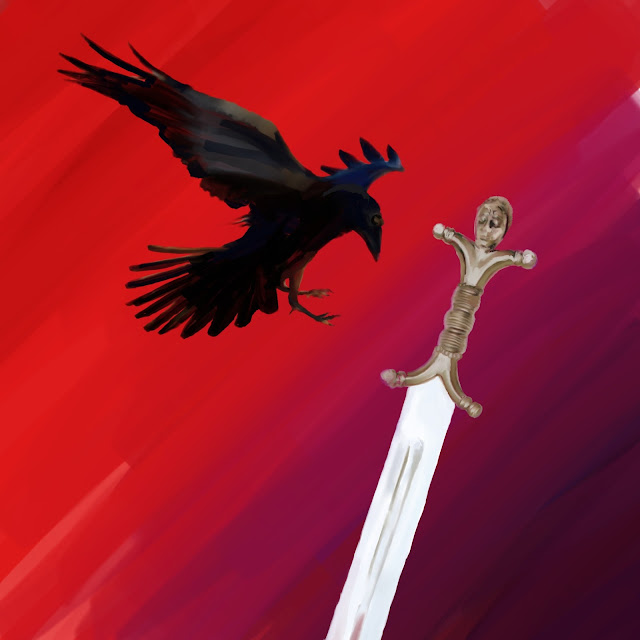
"Raven Perch, on the Battlefield of Death and Absurdity"" by LLS Art


"Ironweed Hope is Resilient" by LLS Art
 

Thursday, January 20, 2022

My Silent Disease


We have a family tradition. Cold Face is what my father calls it, but the textbook word is stoicism: "the endurance of pain or hardship without the display of feelings and without complaint" (Google). Menstrual periods have hurt my entire life. I passed out in high-school Trigonometry once. A foreign exchange student asked if I was okay when I woke up. Apparently, passing out in Trig is normal to Americans, and I assumed extremely painful periods were normal too. Until about two years ago. Suddenly the pain was all of the time, every day. I went to the OB/ GYN, who fortunately believed me because I have a strong family history of endometriosis. Endometriosis occurs when endometrial-like tissue (similar to the tissue that lines the uterus) is found growing outside the uterus, typically in the pelvic cavity and around the outside of the uterus and ovaries but sometimes around bowels, bladder, kidneys, etc. Unfortunately, my MRI showed nothing. Being the stoic that I am, I assumed that meant I was probably just being a baby about some musculoskeletal pain or something (I did catch fast-pitch softball for over a decade and I have jumped out of a helicopter into the ocean without a parachute...so body pain complaints should be expected?). 

The doctors wanted me to describe my pain on the classic ten-point pain scale (the one with frowny faces). I have never understood the 10-point pain scale. It has no real descriptive anchors. How the hell am I supposed to know if this sword stabbing in and out of my belly for 6 months is a 10? Was it the worst pain in my life? I don't know. Periods were normally a 10 as far as I knew. I've broken my nose twice, but I slept both through the following nights both times. I rarely managed to sleep through the night without medicine once a month anyway thanks to periods for like 30 years. I didn't sleep entire nights for months with this new level of pain, it hurt too much, even though I was utterly exhausted. Still, maybe a 10 is being mauled alive by a bear? This wasn't that bad...but then again, maybe I'm too stoic and introverted to be a reliable witness to my own pain?

I got lucky though, and the surgeon signed me up for a laparoscopic hysterectomy despite my poor ability to articulate my pain levels. Stage IV (out of IV) endometriosis everywhere. One thing you never want to hear your surgeon say? "I had to dissect your rectum...and your bladder." 

The surgery was more traumatic than expected and with that much tissue removal, it was probably inevitable that I developed a post-surgical abscess and infection. Fortunately, I live with an ICU physician, so I did not tough that one out until I became septic...still it tried to kill me. I required five days of IV antibiotics and another surgery to drain the abscess. More risk to my life, more time away from being able to do anything but wait in a hospital bed in pain. Don't ask, I don't know if it was a 10 on the pain scale, but it was definitely a 100 on the pain-in-the-ass scale. I couldn't do anything to help anyone, even myself.

What's my point? (And I do have one...) One in ten women suffers in silence for 7 to 10 years before being diagnosed and treated (https://www.usnews.com/news/health-news/articles/2021-03-18/stop-gaslighting-women-about-endometriosis). I was one of them. While endometriosis itself isn't typically fatal, deeply infiltrating endometriosis leads to serious dysfunction of the organs of the pelvis (bladder, colon, rectum, etc.) as well as obliteration of normal anatomical spaces that can cause "frozen pelvis" (imagine being paralyzed in the hips). The complications (e.g. sepsis) can cause death, and even if they don't, who wants to live bed-ridden with a feeding tube and a drain tube for the rest of their life? I think there are probably many more women toughing it out. Maybe to the brink of disaster. Mothers, executives, public servants, healthcare professionals, etc. all of who have bigger reasons to take care of others first and foremost while they tough it out until it becomes brutally obvious. This is a plea to them, and maybe others who are too stoic for their own good. Don't be too tough, too resilient. You can't help anyone if you don't take good enough care of yourself first. Even if you're not a woman, you probably know a woman who is one of the every ten with this silent disease. I think we can do more to help each other articulate our pain, and listen to each other articulate that pain so that it can be diagnosed and treated. Some pain takes years to describe right. Some diseases take ten or even twenty years to name.

Antibiotic IV for 5 days

Sunset from my hospital room


Monday, February 8, 2021

The Don't Fall Apart Workout

My stress is high, my motivation is low, and my chances of a panic attack or serious ergonomic injury and developing a serious spare tire are high if I do nothing. So in the interest of doing something, here is what I am giving a go this month, a workout that any writer (or office worker) for that matter can easily manage to fit in. Many of these brief exercises were suggested by Antartic Winter-Over Expeditioners that I know (they can't go outside and live and work in a confined environment for a year). I hope lots of folks will try it with me, as psychologically, I know other's giving me crap about if I did it today helps me stay social connected (and I mean that in the sweetest tone of supportive sarcasm possible). Seriously though, the research is overwhelmingly convincing. Even pushing ourselves to do a little exercise in very small bursts by our desks boosts our physical and mental fitness in times of extreme stress...like say a Pandemic. It doesn't have to be epic. It just has to be. Done.

Nine times a day, I will take one to five minutes an hour to do these simple things (you heard me say it so you can pester me to it or join in and tell me how much more awesome you are at each): 

A little more detail follows below for anyone who needs or wants it.

1. 9AM: Yoga Sun Salutation (one iteration takes about 3 minutes). I like the one demonstrated in the first three minutes of this video: 

https://youtu.be/DVH-l9lAaTI

2. 10 AM: 10 Jumping Jacks 

3. 11AM: 10 Push Ups

4. 12PM: 5 Flights of Stairs or 50 leg raises (25 each side). Standing is usually easiest in an office and helps your tailbone too. This cute Aussie shows you how to do so well in this one minute video.

https://youtu.be/B7Q7gFrqp5w

5. 1PM: Walk around one city block or 500 steps (indoors)

6. 2PM: Dance to 1 song of choice. I am a fan of this Bollywood Basic Steps video as it can be done right in front of your desk if necessary and doesn't take a good dancer to enjoy it. 

https://youtu.be/UWawJcxYY6I

7. 3PM: 10 Squats. I use my right hip anatomy, so I suggest you do too if you want to try this one. Squat University can help you figure that out in this short video.


8. 4PM: 10 in place or reverse Lunges. Again, it pays to do these safely and this video has a great quick explanation of how to learn that.


9. 5PM Five minutes of Tai Chi. I like this easy sequence of Tai Chi: 


https://youtu.be/cEOS2zoyQw4 


A mental-physical fitness cheat sheet
A Saveable/ Printable Summary 


Monday, December 7, 2020

Peak of the Plague Playlist

In uncertain order of their ability to help you coaster over the peak with sanity intact here are 12 perky song/ music video nominations from a crazy writer you obviously bother to follow...

WARNING: from multiple genres

Doctor Doctor Help Me Please (but maybe not at the disco just right now) 


Tidal (because Imogene is a musical genius and also "Do it for love, Do it for us, Just do it for goodness sake" and wear the damn mask already, unless you're alone, then, "do it just how you like") 


Bootleg Turn (because we're all in need of a drink with a boogie beat) 

Hard Candy Christmas (if Dolly can't help then you're already dead...besides it is "The Best Little Whorehouse in Texas") 


If We Make It Through December (this may be the new national anthem? At any rate, it's fun to sing along in bad accents on Zoom with family you haven't seen in too long) 

St. James Infirmary Blues (because the White Stripes version comes with cartoons!) 

I Don't Care Anymore (deep words of wisdom from the Houston Kid) 

Survivin' (crawling out these sheets to see another day) 

Put Your Head Down (it might keep you alive and AJ and friends in harmony will make you feel fine) 

Add It Up (we know why we can't just one kiss...same song but a whole new conspiracy) 

The Hearse is Backed Up to the Door (take some fun with your comfort)

Hearse (let's just keep the wolves at the door as Ani leaves us with this "dopey love song." Hold someone close because if you can and let it be enough) 


That's twelve days of what I'm listening to...


The Imperative

Flick the brains and dust off your boots and focus your senses on the forest again, the noises in the distance, like the birds singing again. If the birds are singing again, then you are safe to stay in shock for another minute or so. Still, it would be best to get some feeling back in your face and hands. Don’t look at the bodies. You are alive and still standing. Slap your cheeks. Shuffle your feet. Don’t pant. Slow your breath to four seconds of inhaling, holding onto it for four seconds, then let it out for four seconds. You don’t have to succeed one hundred percent every four seconds. Just try. Notice that the sky is still blue. Smell the pine and dirt and blood and cold. Feel how dirty and gritty your hands are from hiding on the ground. Listen to your hungry stomach growl. Hunger is good. It means you are alive. Don’t look down. Look east through the trees. Do you hear gunfire and engines to the east, or only the north and west? If the east sounds silent walk that way. Don’t look down. You are not bleeding. You cannot stop your sister’s bleeding. She is dead. You remember. Walk east through the trees. There is nothing you can do to disguise your genetic heritage. The wrong people will recognize you by sight anyway but stop a second still and swipe up some of that goopy mud. Smear it on your yellow star. Camouflage it. They can’t yell at you for ripping it off that way, but the flash of yellow won’t give you away in the bushes. Walk on. Keep going east. There is a river bed that way, you vaguely remember from that walk with Papa last year, before Jews were shot in the head on the street or put in trains to never return. You know there was a cave. There will not be food, but you will have all the water you can drink and you need to drink. You are still alive. Do not look at your boots. You can wash them in the river later. Look at the ground directly in front of you. Glance up, to the right, to the left. Make sure no one is near. Look for signs of the river and the cave. You were so scared of that cave last year and it’s great dank maw above the burbling water slapping rocks. Anything could be hidden in its thick carpet of decaying twigs and leaves. You could be hidden. You know the cave is an imperative security blanket now. 

Stop!

You’ve stepped on a twig. There is shuffling nearby. Loud. Bigger than a squirrel. Is it to your left? Can you outrun it? Probably not. Climb that tree, the pine with too many limbs. You are small enough to be hidden in it even if you can’t get more than halfway to the top. Yes, the limbs are sticky with sap and wet. Keep going. Quietly. The shuffling is close now. Definitely human. Make your breathing silent, lower than a mouse’s, just as Papa showed you before he put your hand in your sister’s and told you to go hide under the woodpile. In and out, breathe under your hand with your fingers spread so that the puff of air looks no different from the steam of the tree’s great bushy needles tickling all around you. Watch below. There you see, shuffling into sight, a woman with a muddy yellow star. Make a decision, can you afford to ask her for help or offer her your help to find the cave? What is survival worth? It is a difficult question. You are only ten years old, but there is no more time to grow up first. How do you survive? In company or alone? You decide.


Wednesday, November 25, 2020

Cup

A cup of Ire. A cup of Mirth. Half a cup of each for most. Cupping the crown of a baby’s head or the round of a lover’s breast. Cupping all you still possess in your arms after a fire. Cupping the last of your warmth in your hands and blowing on them in hope of more.

You can borrow a cup or a cup of sugar. There is precedent. There is a rumor the Holy Grail is a wooden cup. Valhalla welcomes all with an endless cup. No need to borrow again, as all heroes share with abandon and glee. When someone is drunk, we still say they are lost in their cups. Sometimes I feel lost in my cups without drinking a drop though. Thoughts are nectar that can be both toxic and intoxicating. If time really is a river, then I suspect we should measure it in cups.

Some pups fit in a cup. Teakettle ChuaChuas, Toy Poodles. All kittens fit in a cup. Rats fit five to a cup, but rarely come bearing a cup. Biergarten servers come bearing many cups, with the goal of making everyone lost in their cups enough to sing. Even if you don’t speak the language. Stille Nacht. Alles Schlaft. Except on the Night of Broken Glass. So fragile the peace that humanity tried to pour into that cup of time. Kristallnacht. Brittle even. A shattered cup that cannot be repaired. But glass can be recycled. It has to be crushed, purified and cleaned of contaminates first. It becomes cullet that must be remelted and cast. Completely new shapes of cups can result. The cup acquires a new nature and life by being ground into dust and reformed, but using this dust requires less energy/ heat than forging a glass cup from scratch would. This makes recycling glass cups economical. What about human cups? Does it take less energy to grind out souls to the essence and recast? Sometimes it takes less energy to grind my beliefs to dust and recast. How many cups of time do I have left after all? The limit is unspecified. Glass cups can be recycled endlessly, and they are brittle. Are we any less resilient than glass?

What is at the bottom of our cup of time and soul? Are there tea leaves we can read to forecast the future of time without us now?

If you take away the C you’re left with up, but you can only fill a cup up not pour it up. Not even in space without gravity will a cup pour up, but it can still be filled up. In space, your cup will not runneth over. Molecules stick together in a bubble that just expands beyond your cup...all you can do is shatter the bubble into smaller bubbles and push them out of the cup. These bubbles endlessly exist until someone vacuums them up, or consumes them...cups them again. I start most days with a cup of coffee or tea. Sometimes I have a “good cuppa” with a friend. Is love consuming a cup together? Or pouring a cup for? Or refilling an empty cup? Or smashing a cup together to celebrate your vows? Is love one or all of the cups we can measure in the river of time?

I have a cupful of questions.

The Writer's Cup


Tuesday, November 17, 2020

Solemn Man

Dear Solomon,

For just one man, you were so clever that we forget the moral of the story was not about how to be so clever. You gave us a parable of satisfactory conflict resolution by unsavory methods. By proposing to cleaver the child, you exposed the truth. The most righteous will compromise. Good will yield and kneel before bad, allowing their own family to suffer grievous injustice in order to avoid greater harm. You made it evident that the will to win at all cost is a disease and pride is a necrotic rot to be exposed to the public for cleaning. But what if the public had refused to look? What if the public proposed alternative facts? What if the public had supported handing the baby over to the wrong mother, and the real mother had been forced to watch it happen...to watch someone else raise her baby so that her baby might live? What if your solo-man ruling had been denied final authority? What if crowd apathy allowed the most righteous mother to be wronged? Solomon, I know you were a solemn man, but how did you know the crowd would honor your sincerity?


Respectfully, 

A Modern Moralist


My sketch of a baby that I love this year


Tuesday, October 27, 2020

7 songs for 7 days

 Stress is high, and while part of the pressure is political, this playlist is a bipartisan coping mechanism. These 7 songs don't have much in common besides a measure of dark humor, existential-style fingernails clasping the cliff edge type hope, and enough measures to give you a dance (or at least sway) break when you need it.

  1. Wednesday: Dear Doctor (Rolling Stones). In music, there are 2 main political parties (i.e. Stones vs. Beatles). I guess it is obvious which primary I vote in for chief of albums, but let's argue about it anyway because that's more fun than politics and, "I'm damaged."

  2. Thursday: Sweet Dreams + 7 Nation Army Mashup (Pomplamoose ft. Sarah Dugas). Some say that the sweetest dreams require a big dirty backbeat and "who am I to disagree?" 

  3. Friday: The Outdoor Type (Evan Dando/ Lemonheads). Get ready for a weekend roughing it with a little white lie to yourself. We're ready for the worst, even if the "closest I came to that was one time my car broke down for an hour in the suburbs at night." 

  4. Saturday: Heads Will Roll (Yeah Yeah Yeahs). Happy Horrors! We can always, "dance until you're dead" with the cute wolf pup.


  5. Sunday: When God Closes a Door (Larkin Poe). It's Sunday so, "let's see how the gospel goes"..."in a getaway car."

  6. Monday: In spite of Ourselves (John Prine & Iris Dement). No one likes Monday. Monday is tricky, but "In spite of ourselves, We'll end up a'sittin' on a rainbow, Against all odds..."
     

  7. Tuesday: Let's Dance to Joy Division (The Wombats). The old rhyme says that Tuesday's child is full of grace, so whatever the day brings we can, "celebrate the irony."  


Popular Posts